
Learn About the Routine Vaccine Implementation Process and How to Improve Readiness for New or Updated Vaccine Recommendations
Explore AIM’s Vaccine Implementation Project resources to improve readiness for and implementation of new immunization products and changes to existing recommendations in the U.S.
The resources below are intended to help immunization programs and partners:
- better understand the routine vaccine implementation process
- identify common implementation challenges
- consider practical steps that can support readiness for and response to a new or updated recommendation



About the Project
AIM developed this project in response to persistent implementation challenges that affect how quickly and equitably newly recommended vaccines move from development, licensure, and recommendation into real-world access.
Implementing a new vaccine or a change to an existing recommendation requires coordination across many partners, systems, and timelines. Immunization programs need to prepare for changes while key information is still emerging, including details related to storage and handling, product availability, coding, payment, and more.
AIM examined how routine vaccine recommendations move from research and development to public access. This project aims to strengthen communication, understanding, and collaboration across immunization programs and partners to improve the efficiency of new vaccine implementation.
Katelyn Wells, Ph.D., is the originator and strategic lead of the project, with core research, analysis, and synthesis conducted by Emily Less, MPH, and Julia Donavant, MPH, and clinical review provided by Michelle Fiscus, MD, FAAP.
Referencing and Use of Materials
AIM encourages immunization programs, partners, researchers, and others to use the Vaccine Implementation Project resources for education, planning, and discussion. When sharing or referencing these materials, please cite AIM as the source and keep the original meaning and context of the resources. Refer to the Partner Dissemination Tools for newsletter blurbs, graphics, promotion slides, social media content, and draft email language.
AIM materials should not be changed, edited, reformatted, translated, reproduced, or used in new materials without AIM’s permission.
Please do not:
- Remove AIM branding, authorship, acknowledgements, or disclaimers.
- Change or present the materials in a way that alters their meaning.
- Use the materials to imply AIM endorses a specific vaccine, product, company, policy position, or recommendation.
For permission to adapt or reproduce materials, please contact us.
Environmental Scan
The Environmental Scan: Considerations for Vaccine Implementation is a comprehensive report documenting the routine process, gaps, and promising practices associated with vaccine implementation in the United States. This report summarizes the steps, partners, systems, and common implementation challenges involved in moving from vaccine development and recommendation to public vaccine access.
The scan serves as both a historical record and a strategic planning tool. It can help immunization programs and partners better understand routine implementation steps, identify where timelines and roles may be unclear, and support discussions about partner coordination. By documenting recurring challenges and opportunities across the vaccine implementation process, the scan provides information and ideas to help the immunization community strengthen readiness and improve how new vaccines are implemented.
The scan is not intended to assess which vaccines should be recommended or by whom. The environmental scan reflects routine vaccine implementation processes as they functioned through March 2025.
Routine Vaccine Implementation Process Flowchart
The Routine Vaccine Implementation Process Flowchart provides a visual overview of vaccine implementation from development to public access. The flowchart maps key stages, partner activities, and system dependencies involved in implementing new immunization products and changes to existing recommendations.
This resource visualizes partner roles, timelines, and coordination points across organizations. The flowchart reinforces that the success of downstream implementation depends on earlier interdependent partner actions. The introduction at the top provides a guide for how to interpret the flowchart.
The flowchart is based on processes and systems identified through the Environmental Scan, reflecting routine vaccine implementation through March 2025.
The flowchart was created as a Canva whiteboard, here is how to explore it:
- Use your mouse or trackpad to
- Click and drag to move around the whiteboard
- Scroll to zoom in or out
Vaccine Implementation Playbook
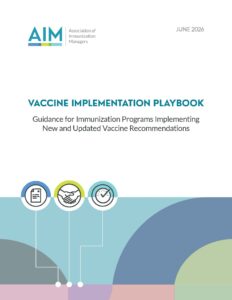
The Vaccine Implementation Playbook is designed to help immunization programs prepare for new immunization products and changes to existing vaccine recommendations.
The playbook is organized around key implementation milestones and includes flexible considerations and resources that immunization programs may adapt based on their local governance and legal requirements, as well as staffing, funding, and partner capacity.
Although the playbook translates findings from the environmental scan into practical information and steps for immunization programs, partner organizations may also use it to better understand the timing, dependencies, and operational considerations that affect immunization program readiness.
Partnership Landscape Analysis Poster
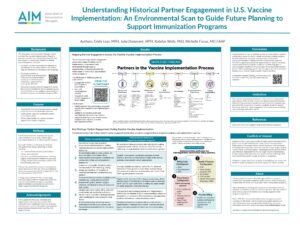
Presented as a poster at the National Adult and Influenza Immunization Summit (NAIIS) 2026, this secondary analysis of the environmental scan:
- characterizes how and when key partners engage across the vaccine implementation process
- clarifies partner roles and coordination points across organizations
- identifies opportunities for partners to better support immunization programs
This poster suggests several possible opportunities for partners to better support immunization programs’ readiness by addressing gaps in communication, timelines, and coordination across the implementation process. AIM is exploring opportunities to support partner coordination through future Vaccine Implementation Project activities.
This poster reflects routine vaccine implementation processes and systems as they functioned through March 2025.
Partner Dissemination Tools
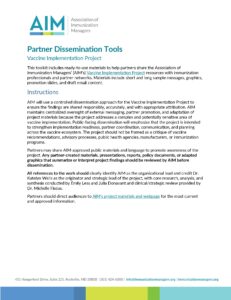
This toolkit includes ready-to-use materials to help partners share AIM’s Vaccine Implementation Project resources with immunization professionals and partner networks. Materials include short and long sample messages, graphics, promotion slides, and draft email content.
AIM will use a controlled dissemination approach for the Vaccine Implementation Project to ensure the findings are shared responsibly, accurately, and with appropriate attribution. AIM maintains centralized oversight of external messaging, partner promotion, and adaptation of project materials because the project addresses a complex and potentially sensitive area of vaccine implementation. Partners may share AIM-approved public materials and language to promote awareness of the project.
Funder Acknowledgement
Support for this project was provided through unrestricted educational grants from vaccine manufacturers GSK, Merck, Pfizer, and Sanofi. Manufacturer representatives participated on the project advisory board; however, AIM maintained full independence and editorial control over the project design, analysis, report content, and final workplan. Participation on the advisory board was offered to representatives from all major vaccine manufacturers. AIM does not endorse specific brands, products, or companies.