Strategy
The Massachusetts immunization program used school survey data to identify schools that may benefit from additional vaccine services. These schools worked with the Massachusetts immunization program staff to learn why coverage may be low and offer a vaccine clinic for students. The partnerships and clinics were a success. There were seven monthly clinics that vaccinated students primarily in urban areas, with over half of the students being uninsured.
Challenge
The Massachusetts immunization program identified schools that reported low vaccination coverage combined with low exemptions, due to causes likely being related to a record access or immunization access issue. Once a list of schools was compiled, the school nurses were contacted to get their perspective on why their rates were lower and to determine if they were interested in having a vaccination clinic at the school. One interest and approval were gained, and planning for mobile clinics began.
Solution
Three immunization staff members began the planning process alongside school nurses to conduct a mobile vaccine clinic on the date of choice determined by the school or local board of health. The team determined expectations, staffing needs, and identified partners who could support other parts of the clinic. The mobile vaccination vendor worked with the school to distribute clinic consent forms, and a combination of contracted nursing staff and department of public health staff assisted during the clinic to confirm which vaccines were needed for each student.
Outcome
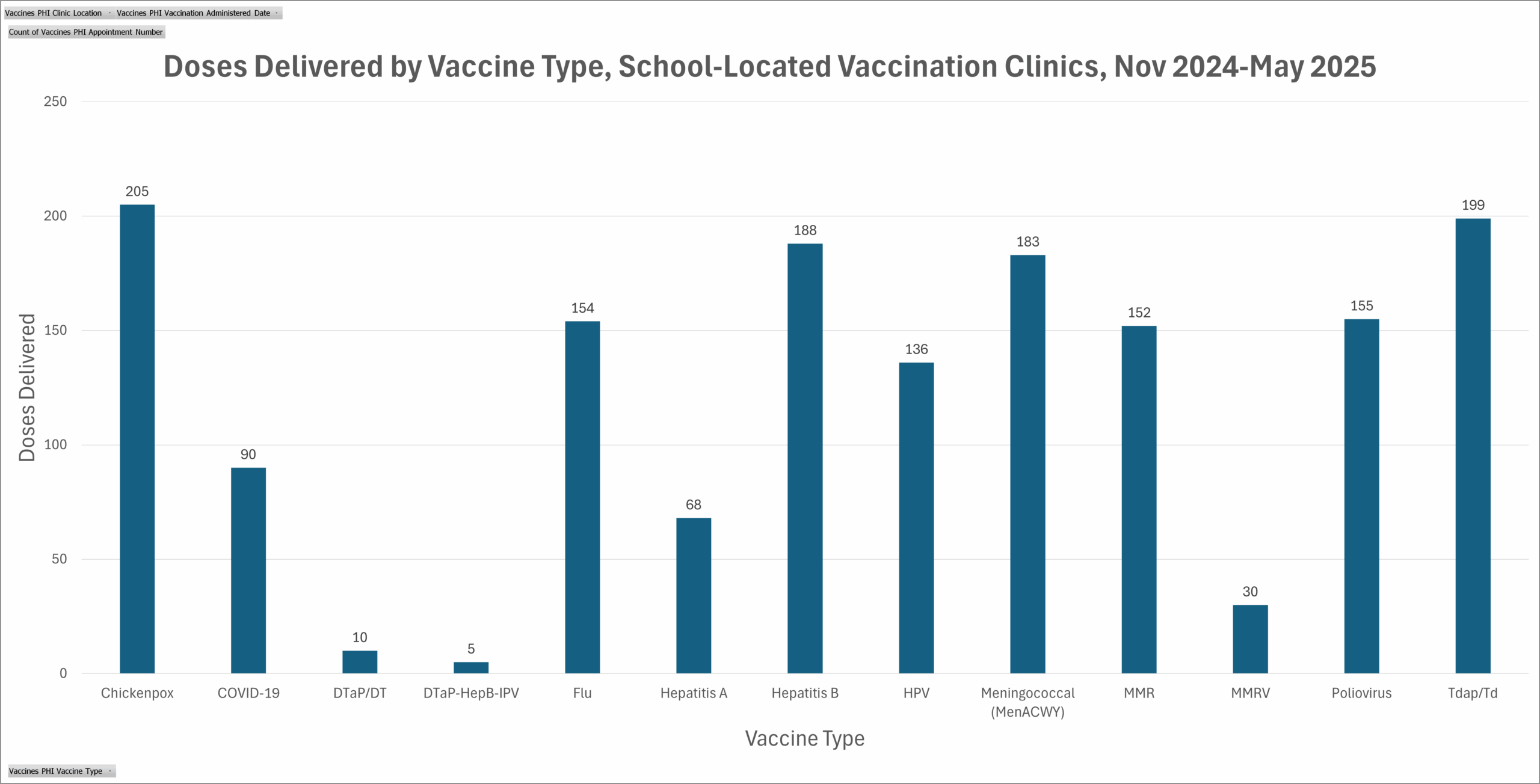
Over the span of seven clinics, the Massachusetts immunization program and school nurse partnership vaccinated 442 children and adolescents with 1,575 vaccines. The majority of these vaccinations (1,352) were given in Brockton, which had four highly attended clinics. Approximately half (52.3%) of those vaccinated were between the ages of 15-18, and nearly all (90.8%) either had no health insurance (57.9%) or had public insurance (32.9%).
There were numerous challenges that needed to be worked through, including accounting for vaccination records (and how to determine what was due on the day of the clinic), managing FERPA concerns, obtaining consent for services in a way that the schools and vaccination provider were comfortable with, and managing patient flow in a clinic that became much more popular than expected. Meetings were held prior to the start of the clinic to assign tasks to all staff present and to identify a clinical and operational lead for the day. After each clinic, the team met to evaluate what went well and what could be improved, which led to the development and refinement of a checklist. This helped clinic staff on the ground become more familiar with the processes. The early clinics laid the groundwork for the additional highly successful and efficient clinics by the end of the seven-month period. Based on all the information gathered, the Massachusetts immunization program staff plan to develop a Best Practices document to share with local organizations and school districts to replicate this process in future years.
Supplemental Materials
- Spreadsheet of proportion of patients by age, race, and insurance status
- Chart of doses delivered by type, school-located vaccination clinics